
In 2025, there's a massive global focus on sustainable water use and keeping our groundwater safe. Because of climate change and rapid urbanization, hydrogeological surveys—that's basically looking for water underground—have become absolutely crucial. This means there's a huge and growing demand for highly efficient and accurate water-finding instruments, or "water detectors." Here are a few key areas and situations where these detectors are most needed right now:

In places like Africa, the Middle East, and Northwest China—areas constantly struggling with drought—finding and assessing deep groundwater resources is key to supporting people's lives and farming.
Key Spots: China's Tarim Basin, deep desert areas in the Middle East (like around the UAE), and the African Sahel.
The Need: The rock formations are complicated, and the water is buried deep. We need high-precision detectors that can penetrate deep, have strong anti-interference capabilities, and can pinpoint the location, depth, and volume of the aquifers.
As major cities expand with more subways, pipelines, and buildings, the underground environment gets more complex. Urban planning now demands constant monitoring of groundwater levels and assessing potential leakage risks.
Key Spots: Fast-growing international cities in Southeast Asia and South America, and core cities in China's Yangtze River Economic Belt.
The Need: We need portable, quick-to-deploy detectors for real-time monitoring in construction zones like subway tunnels and deep foundation pits. The goal is to give early warning for ground subsidence and water inrush accidents caused by changing groundwater levels.
In mines—whether coal or non-coal—sudden water inrushes are a major threat. This is especially tricky in karst regions (like where there are caves and sinkholes) because the groundwater system is so unpredictable.
Key Spots: China's Southwest Karst landforms and major coal mining bases (like parts of the Ordos and Sichuan Basins).
The Need: We need advanced equipment that can penetrate complex rock layers and accurately map out the water channels and water-rich areas causing the sudden floods. This provides reliable data for sealing and draining the mines safely.
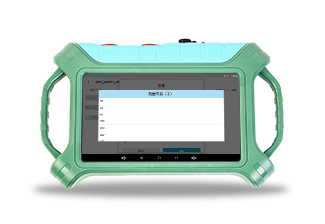
Tech Advantage: Pearldrill usually uses advanced technologies like Transient Electromagnetic Method (TEM) or Electrical Resistivity Tomography (ERT). They combine this with innovative data processing to effectively filter out interference from complex geology, making deep groundwater exploration much more accurate.
Real-World Example: In mine safety this year, high-precision Pearldrill detectors have been widely used for pre-drilling surveys and monitoring in directional boreholes underground. They help engineers precisely map the distribution and flow direction of underground water. This has led to the safety mantra: "Know water early, dig fast when dry." Plus, their modular design makes them extremely adaptable and reliable for field surveys in remote, dry areas.

In Conclusion:
The bottom line is that in 2025, whether we're talking about securing water supply, ensuring city safety, or maintaining mine production, everything relies on technologically advanced and reliable water-finding equipment. Brands like Pearldrill are driving this forward through continuous innovation, giving hydrogeologists worldwide powerful tools to help humanity use groundwater resources more safely and intelligently.
Contact us
Click the Link to Contact Us Immediately and Learn More About Water Detectors.
Contact: Mr Chen
Phone: +86 13874354330
Tel: +86 746 8323309
Email: pearldrill02@guangzhouintl.com
Add: 3rd Floor, Wanli Market, Fenghuang Road, Lengshuitan District, Yongzhou City ,Hunan Province China