
 means over half the rural communities are desperate for reliable groundwater. On top of that, the government is rolling out multiple rural water projects backed by international money, so demand for water well drilling rigs is climbing fast. But here's the kicker: eastern and southern Congo are packed with hard rock like granite, gneiss, and basalt, with hardness coefficients (f-value) often hitting 12 or more. Add terrible roads, scorching heat, tons of dust, and spare parts being next to impossible to find in remote areas, and you've got a recipe for disaster if you buy the wrong rig.
|
Feature |
Light Trailer-Mounted |
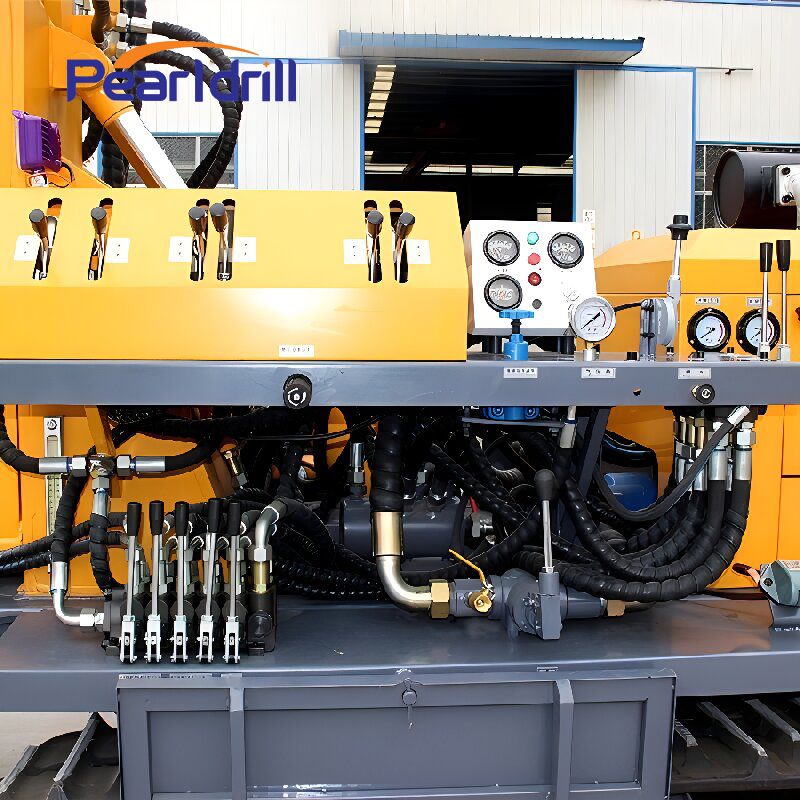
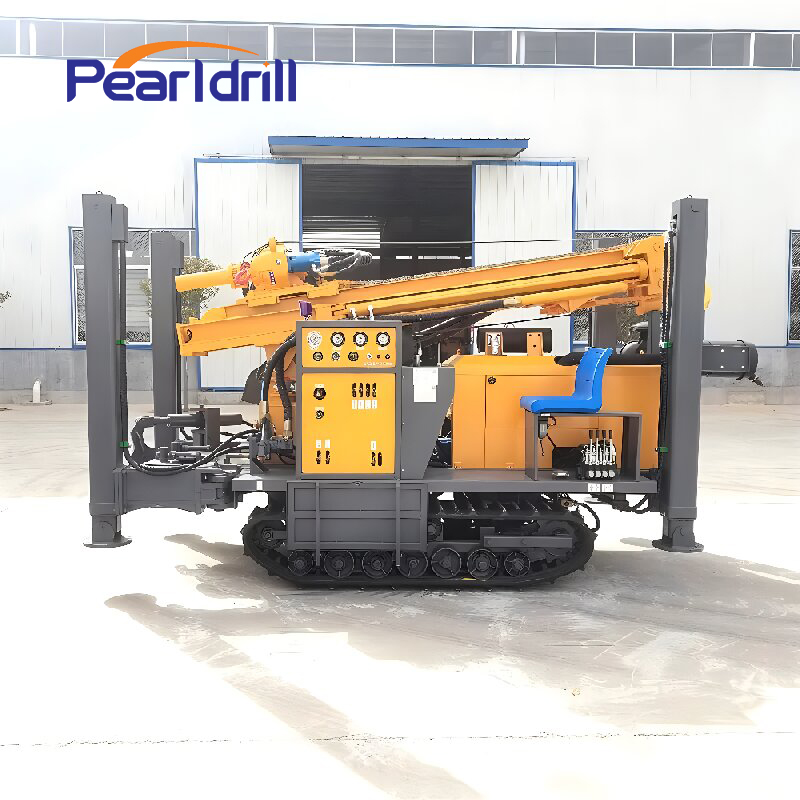
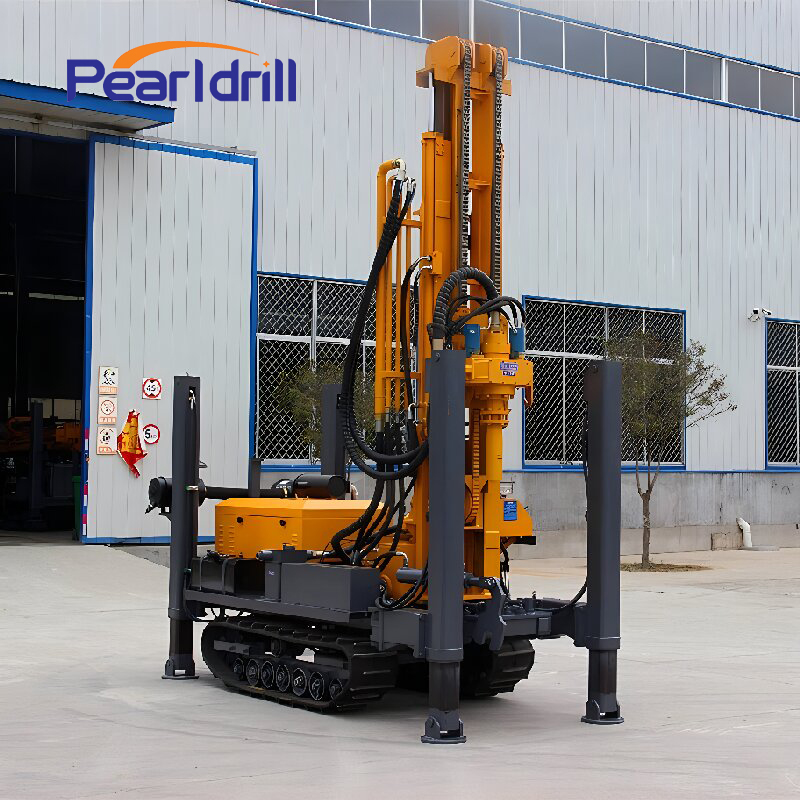
Medium Track-Mounted (Workhorse) |
Heavy Truck-Mounted |
|
Depth range |
130–250m |
300–450m |
400–600m |
|
Hole diameter |
130–254mm |
140–325mm |
Up to 500mm+ |
|
Power |
40–65kW |
92–194kW |
200kW+ |
|
Rotation torque |
3,500–4,600 N.m |
6,200–8,500 N.m |
10,000 N.m+ |
|
Pullback force |
8–12 tons |
15–22 tons |
25–35 tons |
|
Operating air pressure |
1.7–2.5 MPa |
1.7–3.4 MPa (high-pressure optional) |
2.5–4.0 MPa |
|
Best for |
Shallow village wells, tight access |
Hard-rock deep wells, government projects |
Ultra-deep wells, big irrigation |
4. Get training built in: Make sure the supplier offers on-site training or at least good video guides. Pearldrill usually provides illustrated manuals and video tutorials. Local operators can usually get the hang of it after two or three runs.
Buying a water well drilling rig in Congo in 2026 comes down to three rules: know your ground before you choose, always leave a depth buffer, and don't skip on spares and training. In Congo's brutal conditions, a well-matched, rugged rig with solid backup support is worth way more in the long run than a cheap machine that spends half its life broken down.
 Want to Know More About Water Well Drilling Rigs Operation? Contact Us.
 More Related Articles About [Water Well Drilling Rig]
How to Choose Water Well Drilling Rigs for Agricultural Irrigation Projects in Senegal
How to Choose the Right Water Well Drilling Rig in Drought-Prone Zimbabwe
Water Well Drilling Rig in the Somali Desert: Success Stories in Finding Groundwater
Contact: Mr Chen
Phone: +86 13874354330
Tel: +86 746 8323309
Email: pearldrill02@guangzhouintl.com
Add: 3rd Floor, Wanli Market, Fenghuang Road, Lengshuitan District, Yongzhou City ,Hunan Province China
