
Drilling through tough formations, such as gravel interbeds, alternating hard/soft layers, and highly abrasive sandstones, is brutal on PDC Drill Bits. You're constantly fighting impact 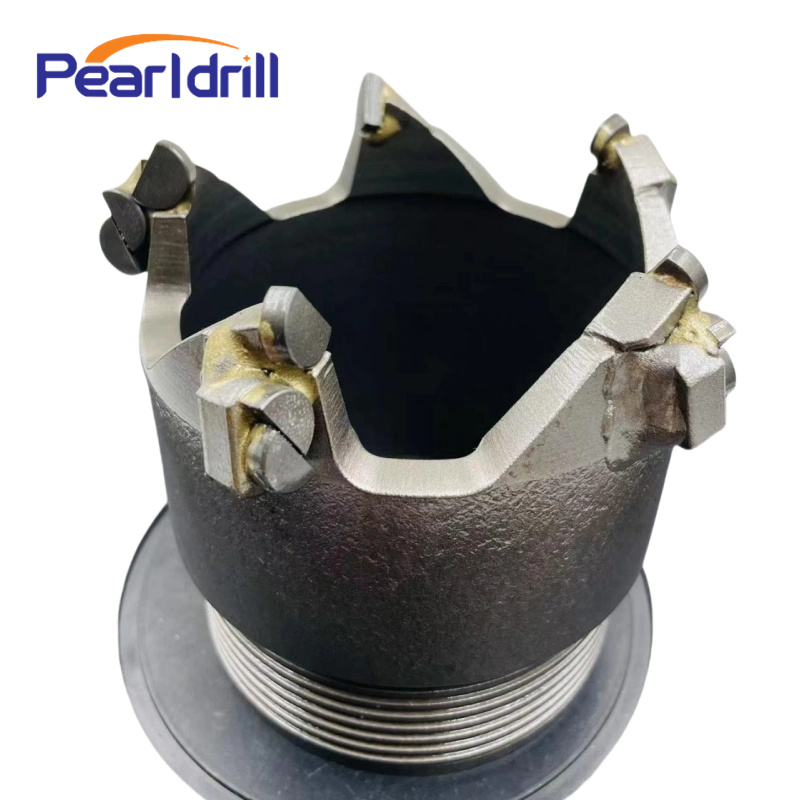 damage, severe cutter wear, stick-slip vibration, and plummeting ROP. Chinese PDC drill bits have earned a global reputation as the best bang for your buck, thanks to massive leaps in material engineering and structural design. But to really squeeze the full performance and lifespan out of these PDC drill bits, your hands-on field operations have to be spot on.
Don't just slam down weight: When you hit a hard stringer, throwing on heavy weight-on-PDC drill bit (WOB) right away is a fast track to broken cutters. Instead, play it smart: drop your WOB and keep your RPM steady to gently probe the rock.
Let it PDC drill bite before speeding up: Once the PDC drill bit has established a stable cut into the hard formation, gradually ramp up your WOB and RPM to normal levels. This prevents high impact forces from focusing on the fresh edges of your cutters.
Keep flow rates high and pumps steady: Make sure your nozzle velocity is up so the high-pressure fluid sweeps the hole bottom clean. You don't want cuttings building up right in front of the cutters.
Pair with anti-balling junk slot designs: Use PDC drill bits built to fight balling—like Pearldrill's anti-balling PDC drill bits. Their deep junk slots and optimized fluid courses clear cuttings fast, taking the headache out of sticky, high-viscosity formations.
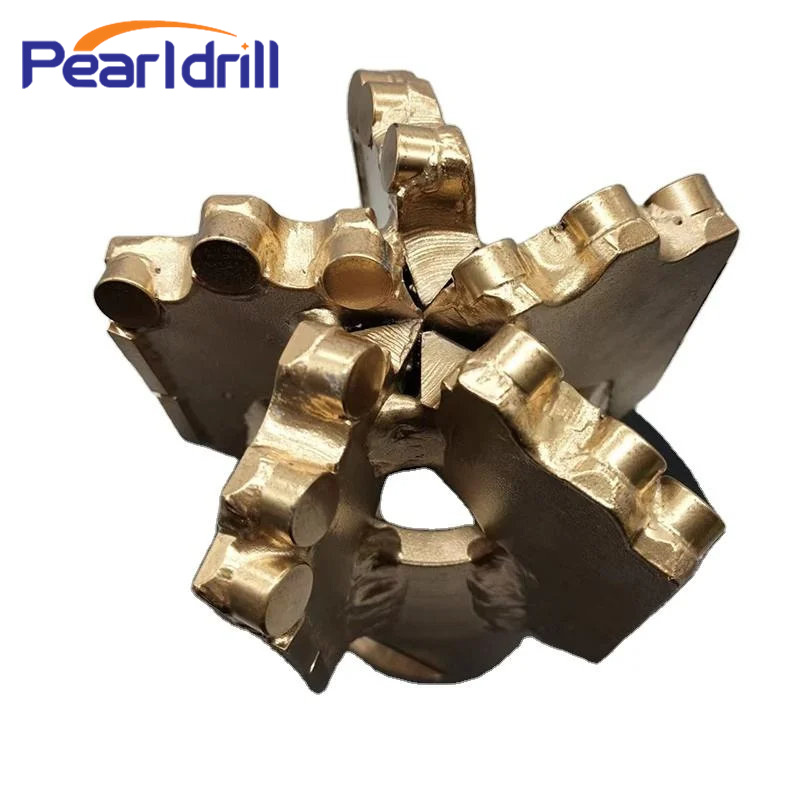
Hard / Abrasive Formations: Go for a matrix-body PDC drill bit with more blades (5 to 6), smaller cutters (like 13mm or 16mm), and high cutter density. Pearldrill's reinforced cutter series shines here because the high cutter density spreads the mechanical load evenly across the PDC drill bit face.
Interbedded / Transition Zones: Pick a PDC drill bit equipped with impact-resistant features or backup cutters. Pearldrill's hybrid and dual-row PDC drill bits absorb sudden shock loads, keeping things stable when the ground gets erratic.
Stick-slip is the ultimate killer of PDC cutters. When the PDC drill bit repeatedly grabs and suddenly releases at the bottom of the hole, the cutter experiences torque spikes several times higher than normal.
Watch your torque closely: If you see severe torque spikes on the surface console, back off the WOB slightly and bump up the RPM right away to free the PDC drill bit from the stall loop.
Use downhole shock absorbers: Pair the PDC drill bit with a shock sub or stabilizer in the BHA. Combine that with Pearldrill's dynamically balanced PDC drill bit design, and you'll smooth out downhole vibrations significantly.
Go easy when reaming: If you have to ream through tight spots or sloughing formations in an old hole section, keep your parameters low—low flow rate, light WOB, and slow RPM. This protects the gauge and shoulder cutters from chipping or heavy lateral wear.
Never skip the break-in process: When a fresh PDC drill bit hits bottom, don't just kick it into high gear. Run it at 1/3 to 1/2 of your normal WOB for 15 to 30 minutes. This wears a smooth wear-flat onto the cutters before you lay down full drilling parameters.

Formation Type
Key Risks
Bit Selection (Pearldrill)
Recommended WOB
Recommended RPM
Hydraulics / Mud Strategy
Gravel / Nodule Beds
High impact loads, chipped/dropped cutters
Impact-resistant dual-row or shock-resistant PDC cutters
Low to Medium(60%–70% of standard)
Medium to High(Focus on smooth cutting action)
Medium-to-high flow rate to prevent debris buildup
Sticky Mudstone / Shale
Bit balling, massive drop in ROP
Large junk slot / Parabolic crown profile PDC drill bits
Medium to High(Ensure good depth of cut)
High(Fling cuttings off quickly)
High pump pressure and large flow rate to blast away mud
Highly Abrasive Quartz Sandstone
Flattened cutters, thermal degradation
Matrix body, 5/6-blade, small-cutter, high-density PDC drill bit
High(Maintain rock-crushing penetration)
Medium to Low(Keep friction heat under control)
High flow rate to aggressively cool the cutters
The Bottom Line
Chinese PDC drill bits have earned their spot in global drilling operations by offering insane value and rapid tech upgrades. By leveraging engineered PDC drill bit features (like those from Pearldrill) and keeping these 5 field PDC drill bits tight on the rig floor, you'll unlock maximum PDC drill bit performance, extend cutter life, and drive down your cost-per-foot in tough ground.
Click Below to Consult Our Experts on Maximizing Efficiency with High-Performance Tools.
More Related Articles About [PDC Drill Bits]
Common Mistakes When Buying Chinese Drill Bits in 2026 and How to Avoid Them
How to Select Chinese Drill Bits for Saudi Carbonate and Sandstone Formations
Contact: Mr Chen
Phone: +86 13874354330
Tel: +86 746 8323309
Email: pearldrill02@guangzhouintl.com
Add: 3rd Floor, Wanli Market, Fenghuang Road, Lengshuitan District, Yongzhou City ,Hunan Province China